Melvor Idle 2 Bank and Shop Toolkit
Stop losing quest items in the clutter — organise the bank and spend GP on tools that matter.
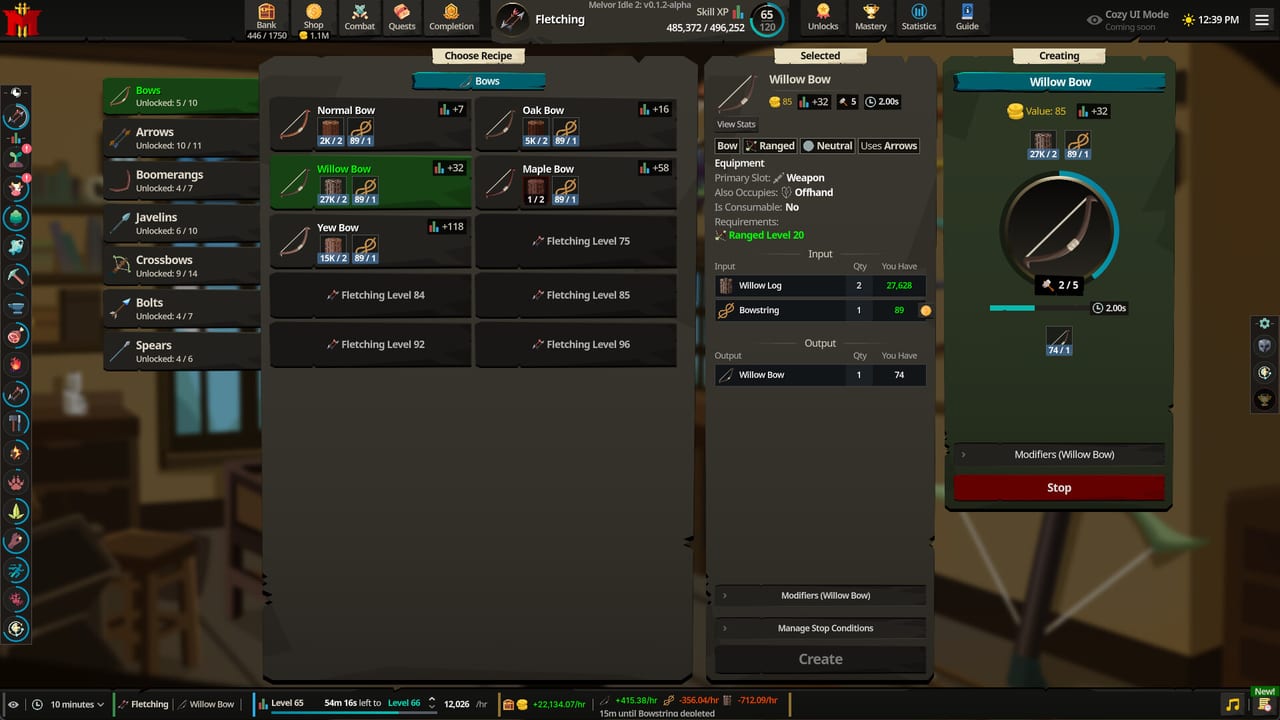
The bank is a productivity tool
Melvor Idle 2 gives you more items than attention. Early Access alone added over a thousand new items on top of the demo baseline. Players who treat the bank like a junk drawer lose quest materials, overbuy slots, and mis-sell valuables. Treat tabs, tags, placeholders, and the shop as part of your toolkit beside the Offline Progress Planner.
Bank tabs and naming
Create tabs that match how you think while playing:
- Food / Combat — Auto Eat stacks, potions, ammo, runes, bones
- Quest — Anything the log currently needs
- Gathering — Logs, ore, fish, hides, herbs
- Artisan inputs — Bars, planks, essences, vials
- Junk sale — Explicit trash you are ready to vendor
Rename tabs when Acts change. A Quest tab from Act 1 should not silently become a museum of finished materials.
Tags and placeholders
Tags mark items you must not sell. Placeholders keep a slot visible after you spend the last copy so you notice when a stack hits zero mid-offline. Use placeholders on:
- Auto Eat food
- Ammo and runes for your active loadout
- Quest-critical uniques
- Compost / pest control consumables for Farming
Equipment sets
Named equipment sets separate Melee, Ranged, Magic, and Slayer kits. Pair with the improved Early Access tooltips that compare stats to your current loadout (Tab cycles comparisons). Wrong-ammo disasters drop when each style has a saved set — see Combat.
Shop priorities
Spend GP in this order unless a quest hard-requires something else:
- Gathering tool upgrades for your active money or Mastery skill
- Bank slot expansions when you are truly capped after sorting
- Quality-of-life unlocks that remove daily friction
- Combat convenience (extra loadouts, Auto Slayer helpers) once food is stable
- Cosmetics last
Early Access also added more permanent skill shop purchases. Read the skill panel before assuming a upgrade is account-wide.
Early Access bank/shop QoL worth enabling mentally
- Legacy Sidebar (default on) — see levels while shopping or banking
- Item stats in tooltips — compare gear without opening a wiki tab
- Larger quick-equip weapon menu with style filters
- Character menu — rename, copy save string, view stats
- Reach Level stop condition — stop a skill at a target level while you are away
Common bank failures
- Selling the last quest item during a tidy-up
- Buying slots before deleting junk and finishing sale tabs
- Mixing food with lookalike crafting materials
- Forgetting placeholders so offline crafting silently stops
- Ignoring money-making prices after the feather nerf and jewellery buffs
Shop vs Mastery Guild spending
Some power comes from GP; some from guild ranks. If a cheap shop tool finishes a guild task twice as fast, buy it before grinding raw hours. Link decisions to Mastery Guilds and Progression.
Weekly bank ritual
- Empty Junk sale tab.
- Move new quest items into Quest.
- Restack food/ammo/runes placeholders.
- Buy at most one meaningful shop upgrade.
- Copy a save string if you changed a lot of settings.
Related pages
- Tools Hub
- Offline Progress
- Getting Started
- Money Making Tier List
- Updates for patch-driven price changes
A clean bank is not aesthetics. It is how Melvor Idle 2 players keep offline hours honest.
Frequently Asked Questions
Quick answers to the most common questions.
When should I buy more Melvor Idle 2 bank slots?
After you sort junk, tag quest items, and still hit the cap during normal gathering. Do not buy slots to avoid organising.
What are bank placeholders for?
They keep an item slot visible at zero quantity so you notice when food, runes, or quest stacks run out.
Should I buy cosmetics from the shop early?
No. Fund gathering tools, slots you truly need, and combat QoL first.
Did Early Access change shopping or bank UI?
Yes. Legacy Sidebar, richer item tooltips, larger quick-equip filters, and a character menu with copy-save are part of the EA QoL pass.