Melvor Idle 2 Skills Overview
Gathering, artisan, combat, and the three big Early Access unlocks.
How skills fit together
Melvor Idle 2 is built on skill synergies. Gathering skills create raw resources. Artisan skills turn those resources into bars, food, runes, potions, arrows, and equipment. Combat skills spend supplies while returning loot, bones, and Slayer rewards. Utility skills such as Thieving, Agility, Astrology, and Herblore sit across the graph as money makers, unlock keys, and global multipliers.
Early Access ships with a large skill roster (commonly described as 25 skills in current build materials) and a level cap of 99 for the launch content window. Marketing and roadmap posts also discuss a longer-term path toward higher caps and additional skills before full release. For day-to-day play, treat 99 as your planning horizon unless a patch notes otherwise.
Pair this overview with Getting Started, the early skill tier list, and Mastery Guilds.
Gathering skills
Gathering skills are your raw input engines:
- Woodcutting — logs for Firemaking, Fletching, Construction-style needs, and early GP.
- Fishing — food ingredients and niche materials.
- Mining — ores for Smithing and Runecrafting pressure.
- Farming / related production — renewable crops and inputs for Cooking and Herblore.
- Hunting / Ranching-style loops — pelts, meats, and unique materials that feed artisan crafts.
- Thieving — GP and uncommon loot with target ladders by location.
Train gatherers first when a recipe is starved. Buy the matching shop tool upgrades for the skill you are actively idling; a cheap axe or pick upgrade often beats hoarding coins for later vanity purchases.
Artisan skills
Artisan skills convert volume into power:
- Cooking — food for Auto Eat and quest checks.
- Smithing — bars and metal gear.
- Crafting / Fletching — armour pieces, ammo, and utility items.
- Runecrafting — rune supply for Magic.
- Firemaking — log sinks with XP and side bonuses.
- Herblore — potions that buff nearly every other skill.
If combat feels weak, the fix is often Cooking and Smithing rather than another hour of Attack. If Magic stalls, Mine and Runecraft before you blame spell tiers.
Combat skills
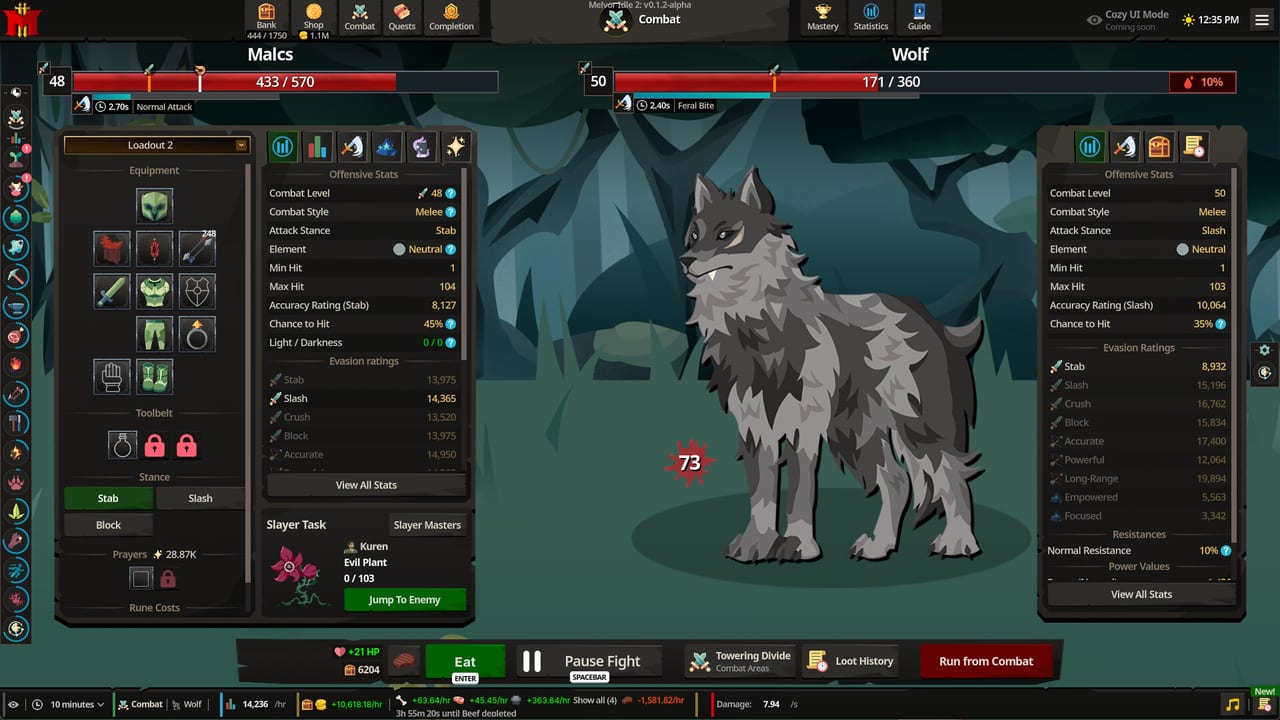
Attack, Strength, Defence, Hitpoints, Ranged, Magic, Prayer, and Slayer level while you fight. Stance choice controls XP splits. Defence contributes to combat level across styles, so neglecting it punishes every setup. Prayer adds toggles with point costs; Slayer adds tasks, coins, and area unlocks. Deep mechanics live in the Combat guide.
Astrology, Herblore, and Agility
These three skills were highlighted as major Early Access unlocks beyond the demo:
- Astrology — permanent bonuses across skills and special unlocks such as aurora-style buffs at higher mastery ranks.
- Herblore — potions for every skill; one of the strongest efficiency multipliers in the game when kept current.
- Agility — techniques that unlock unique content and equippable utility for selected non-combat skills.
When your account feels slow, check whether these three are under-levelled before you blame base gathering rates.
Mastery versus levels
Levels unlock actions and gear. Mastery Guild ranks add account-wide bonuses through tasks. A skill at a middling level with strong guild progress can outperform a higher level skill with ignored tasks. Read Mastery Guilds before planning a week-long grind.
Practical training order ideas
- Secure Woodcutting → Cooking food → basic Mining/Smithing.
- Unlock combat food safety and Stone-to-better gear.
- Push quest-gated skills as Act content demands — see Quests.
- Invest in Astrology/Herblore/Agility when available.
- Specialise money makers from the Progression guide and tier list.
Tracking efficiency
Use the Current Action panel for XP/hr and item/hr. After shop upgrades or potion unlocks, confirm the rate actually moved. The Event Log catches milestones you missed while offline. Presence can show how many players share your action, which is social flavour rather than a meta signal.
Watch a skills-oriented overview
The embedded video covers idle mechanics, early production, gold, quests, Mastery Guilds, and combat prep. Use it as a companion to this map, then dive into specialised pages for combat and progression.
Frequently Asked Questions
Quick answers to the most common questions.
How many skills are in Melvor Idle 2 Early Access?
Current Early Access materials commonly describe about 25 skills with a level 99 cap for the launch content window.
Which new skills matter most?
Astrology, Herblore, and Agility are high-impact unlocks because they buff or unlock content across the rest of the account.
Should I max one skill at a time?
Usually no. Melvor Idle 2 thrives on balanced production chains. Raise skills that unblock recipes, quests, and Mastery tasks.
Where is Township?
Township from Melvor Idle 1 is not part of the Melvor Idle 2 skill roster described in comparison coverage of the sequel.